Engineered to elevate brand identity and secure regulatory compliance across global markets.

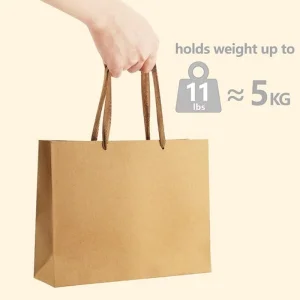
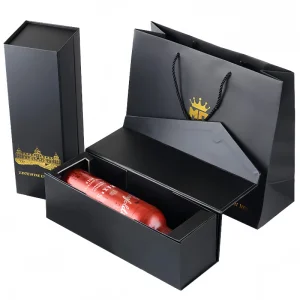
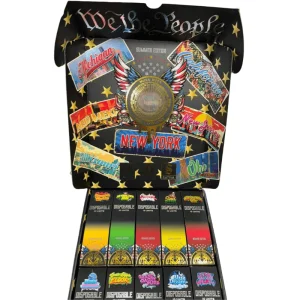
Global consumer behavior has undergone an irreversible transition. Today, brand choices are heavily influenced by the ecological foot-print of a product's packaging. Among all viable options, custom-designed, ODM (Original Design Manufacturer) printed kraft paper bags have emerged as the leading alternative to polymer-based packaging.
But this transition involves more than just swapping materials. For international enterprises, it is a complex balancing act of structural strength, visual consistency, cost efficiency, and compliance with dynamic environmental laws. Sourcing teams can no longer view kraft bags as basic commodities; they must approach them as highly engineered systems designed for brand storytelling and automated logistical distribution.
Inside the lab: How material science and digital technology are reshaping the humble paper bag.
Developing compostable, water-based dispersion barriers to replace PE lining. These coatings provide excellent grease resistance (Kit Rating > 9) and water barrier properties while preserving the recyclability of the paper substrate.
By incorporating nanocellulose into the wood pulp matrix, we can increase tensile energy absorption (TEA) by up to 40%. This allows for a reduction in basis weight (GSM) without compromising weight-bearing capacity.
Integrating covert anti-counterfeiting elements directly into flexographic printing inks, alongside food-grade thermochromic indicators. These features verify authenticity and product temperature throughout the supply chain.
Modern ODM kraft bag manufacturing is evolving past simple folding and pasting. Leading factories are applying precision coatings to create multi-functional bags that resist oils, water vapor, and mechanical stress. The long-term goal of the industry is a fully circular economy, where every paper fiber can be reclaimed, processed, and reprinted within municipal waste streams.
How we tailor ODM design and material specifications to meet the distinct challenges of different markets.
Online retail demands high puncture resistance and reliable seal strength to protect goods in transit. We customize heavy-duty kraft mailers (120–150 GSM) with dual self-adhesive strips and tear-tape openings, keeping packing lines efficient and returns straightforward.
For high-end consumer brands, the bag is a key brand touchpoint. We specialize in luxury carrier bags featuring structural card inserts, hot-foil stamping, spot UV finishes, and soft-touch handles (such as herringbone cotton or paper twist) that match the brand's aesthetic.
In food service, maintaining heat and keeping grease contained are critical. Our greaseproof kraft bags feature bio-based, compostable barrier coatings. This prevents oil staining and structural breakdown while keeping the packaging fully recyclable.
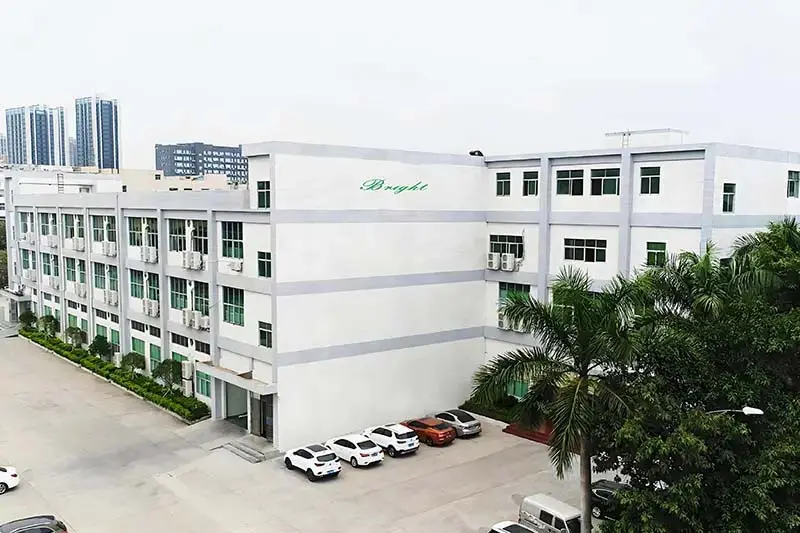
Modern Chinese packaging factories have shifted away from manual, labor-heavy assembly. Brightpack operates inside a highly automated, digital ecosystem. We utilize automated inline bag-making machinery that prints, creases, cuts, folds, and glues in a single continuous process. This ensures consistent quality across production runs.
Our digital ERP systems manage the entire workflow, from checking pulp inventory to scheduling print queues and tracking shipments. This integration reduces waste, prevents human errors, and keeps our operations lean. For global brands, this translates into stable pricing, shorter lead times, and reliable quality for large-scale orders.
Addressing the key metrics and risk-reduction strategies required by professional procurement teams.
We analyze the complete cost picture, balancing bag design against shipping volume to maximize container utilization. By optimization carton dimensions and pallet configurations, we help reduce ocean freight costs per unit.
We keep delta-E color deviation below 2.0 (ΔE < 2.0) across different print runs. By using digital spectrophotometers and ink-formulation software, we maintain brand color consistency across both recycled kraft and white bleached paper substrates.
To support seasonal retail and dynamic campaigns, we run a flexible production network. We provide swift prototyping and rapid volume scaling, helping brands react quickly to changing market demands.
Navigating global compliance is essential for smooth customs clearance and market entry. Our engineering team reviews packaging designs against local laws in over 50 destination countries. This includes confirming EU REACH compliance for chemical substances, verifying FDA 21CFR food-contact safety, and applying IPPC ISPM-15 markings to export wood elements.
We source raw paper from FSC-certified forests, providing a verified chain of custody. This helps clients comply with strict anti-deforestation laws like the EUDR. By addressing regulatory details early in the design stage, we minimize customs risks, helping you avoid costly shipping delays.
Since 2017, Brightpack has been a manufacturing partner for custom, high-quality packaging solutions. We combine design expertise, material knowledge, and modern machinery to create packaging that supports your brand presence and complies with international standards.
We build packaging to comply with regulations like EU REACH and US FDA 21CFR. We address customs compliance during the design phase to help ensure smooth transit across borders.
Our tooling and die-cutting machines maintain a tolerance of ≤±0.5mm, alongside HD flexo and offset printing up to 1200dpi for clean text and sharp graphics.
From FSC-certified paper to low-VOC inks, we run materials through drop tests and vibration checks. We aim for a production defect rate below 0.5%.
Our facility operates inline machinery for efficient scaling. We offer 3-day sample turnarounds for urgent project reviews.
A systematic, transparent process from initial concept validation to secure shipping.


Answering common engineering and procurement questions about kraft paper bag customization.
Virgin kraft paper is made from raw wood pulp, featuring long, unbroken cellulose fibers. This structure yields high tensile strength, burst index, and tearing resistance, making it suitable for heavy-duty carry bags (carrying 5–10 kg). Recycled kraft contains shorter fibers from reclaimed paper streams. While more eco-friendly, it offers lower tensile strength and is typically used for lighter retail applications or at a higher basis weight (GSM) to compensate for the strength difference.
Ink cracking occurs when fibers stretch and break during folding. To mitigate this, we use water-based inks containing flexible polymers that stretch slightly when bent. We also run precise creasing inline before the final fold. This process pre-conditions the paper fibers along fold lines, reducing the mechanical stress that causes cracking.
We utilize biodegradable biopolymers like PLA (polylactic acid) and PBS (polybutylene succinate), alongside water-based acrylic dispersion coatings. These options provide grease and moisture resistance for food packaging while remaining fully compostable. The paper remains repulpable in standard recycling mills, avoiding the complex separation required by traditional PE-laminated bags.
Our flexographic and offset presses feature automatic register control systems. These systems use optical sensors to scan print marks in real-time, feeding positional data back to the cylinders to adjust alignment automatically within +/- 0.1mm. This process keeps patterns and text sharp and consistent from the start of the print run to the end.
Brown kraft naturally absorbs ink and shifts color values due to its dark base. To achieve vibrant brand colors on a brown substrate, we apply a high-opacity white base ink first under the target colors. This base blocks the brown background, allowing subsequent colors to show accurately and match target brand swatches.
Stay informed about changes in packaging materials, international regulations, and design updates.
Explore how optimizing your packaging's material thickness can reduce carbon tax liabilities under new European green shipping rules.
A guide to achieving brand color consistency across both bleached and unbleached kraft papers using vegetable-based inks.
A detailed breakdown of how to prepare your import documentation with FSC certificates and geolocational wood sourcing maps.
Request Compliance ChecklistEngineered packaging systems designed for global distribution and retail presence.