
Wholesale buyers need paper bags that protect products, represent a brand, and remain practical at scale. Custom Paper Bags For Business can support these goals when size, material, printing, and handle design are carefully matched. A bakery may need grease-resistant paper and reinforced bases. A clothing retailer may prefer wider bags with twisted cotton handles. These details affect cost, durability, and customer experience.
Reliable sourcing begins with clear specifications. Buyers should confirm paper weight, bag dimensions, handle attachment, printing method, and carton quantities before placing an order. A sample should carry realistic weight, not just look attractive in a product photo. Small tests can reveal weak seams, ink rubbing, or handles that loosen after repeated use. Those problems become expensive when thousands of bags arrive.
Supplier experience also matters. Established manufacturers usually provide production samples, quality records, packaging details, and consistent communication. However, experience alone does not guarantee every shipment will be perfect. Buyers should request inspection standards and review previous wholesale projects when possible. Environmental claims deserve the same caution. Recycled content, recyclable coatings, and responsible paper sourcing should be supported by clear documentation, not vague marketing language.
The best wholesale choice balances appearance, performance, price, and dependable delivery. It may not be the cheapest option. A stronger bag can reduce product damage and customer complaints. This guide examines practical bag styles, customization choices, pricing factors, and supplier checks for business buyers. It also considers common mistakes, because attractive packaging can still fail under everyday retail pressure.
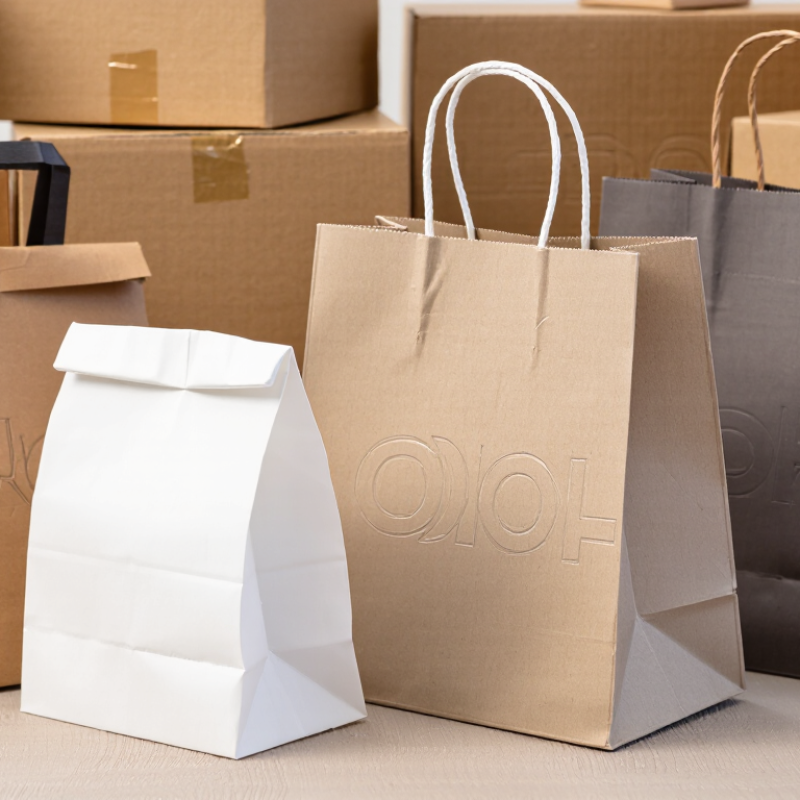
Custom paper bags serve different wholesale needs, and the right style depends on what each bag must carry. SOS bags have a flat base and stand upright, making them practical for groceries, takeaway orders, and countertop packing. Twisted-handle bags suit clothing and boxed goods; their handles feel comfortable, but weak paper can tear at the folds. Flat, die-cut handle bags save space in storage. They work best with lighter products and carefully reinforced openings.
Size and paper weight matter as much as printing. A gusset adds room for bulky items, while a wider base helps a bag sit steadily on a shelf. Ask suppliers for samples loaded with products similar to yours. Check handle attachment, seams, and how the bag feels when damp. Small details show quickly.
The American Forest & Paper Association’s 2023 recycling report estimated that 65–69% of U.S. paper was recycled. This figure covers paper overall, not custom bags specifically. Clean, dry paper is generally easier to recover, though local collection rules differ. Printing choices deserve a second look, too: heavy coatings or mixed materials may complicate sorting. A polished finish can look attractive, but it is not always the most practical wholesale choice.
| Bag Type | Common Business Uses | Typical Paper | Typical Paper Weight | Handle or Closure | Common Size Range (W × D × H) | Common Customization | Wholesale Buying Consideration |
|---|---|---|---|---|---|---|---|
| Twisted-Handle Kraft Shopping Bag | Retail stores, bookstores, gift shops, and general merchandise | Brown or white kraft paper | 80–120 gsm | Twisted paper handles, usually glued to the inside of the bag | About 18–45 × 8–18 × 22–50 cm | One- or two-color printing; larger print runs may support additional colors | A versatile everyday option. Match paper weight and bottom construction to the expected product load. |
| Flat-Handle Kraft Shopping Bag | Grocery counters, takeaway orders, pharmacies, and convenience retail | Brown or white kraft paper | 70–110 gsm | Flat paper handles attached to the bag | About 20–45 × 10–20 × 25–45 cm | Flexographic printing is commonly used for simple logos, text, and repeat patterns | Often practical for high-volume orders. Confirm handle attachment strength and bag capacity with a filled sample. |
| Handleless SOS Paper Bag | Bakeries, cafés, grocery departments, and quick-service food counters | Food-contact-suitable kraft paper, where required | 40–80 gsm | No handle; square-bottom, self-opening construction | About 10–30 × 6–18 × 20–45 cm | Simple exterior printing; grease-resistant or window options may be available for suitable applications | Compact to store and efficient for counter service. Check food-contact requirements and intended contents before ordering. |
| Premium Rope-Handle Paper Bag | Fashion, cosmetics, specialty gifts, and higher-end retail packaging | Coated or uncoated paper, often with a reinforced top and base | 150–250 gsm | Cotton, paper, or synthetic rope handles, often secured with knots or eyelets | About 20–40 × 8–18 × 25–45 cm | Full-color printing, matte or gloss finishes, embossing, and foil details may be available | Heavier construction and finishing can increase unit cost and production time. Request a pre-production sample. |
| Paper Wine Bag | Wineries, bottle shops, restaurants, and corporate gifting | Reinforced kraft or coated paper | 120–200 gsm | Rope or twisted-paper handles; reinforced base is common | About 10–18 × 8–12 × 33–42 cm per bottle | Single-bottle and multi-bottle layouts; printed panels and decorative finishes | Verify the bag is designed for the bottle count and weight. Dividers may be needed for multi-bottle packaging. |
| Takeaway Paper Bag | Restaurants, cafés, food delivery, and takeaway counters | Kraft paper, with suitable grease-resistant options for some foods | 60–100 gsm | Usually flat handles or no handles, depending on format | About 18–40 × 10–25 × 20–40 cm | Exterior printing; some formats can include a viewing window or food-resistant lining | Choose a size that keeps containers upright. Confirm that coatings and materials suit the food and local requirements. |
| Paper Gift Bag | Gift shops, events, seasonal promotions, and product launches | Colored, coated, or textured paper with optional reinforcement | 100–200 gsm | Ribbon, rope, or twisted-paper handles; some styles include a folded top | About 15–35 × 6–15 × 20–40 cm | Color printing, specialty finishes, tissue-paper pairing, and decorative attachments | Confirm that custom colors and finishing effects are consistent across the order, especially for repeat purchases. |
| Recycled Kraft Paper Bag | Retailers and organizations seeking paper packaging with recycled content | Recycled-content kraft paper; available in brown and some printed finishes | 70–140 gsm | Flat or twisted paper handles, depending on design | About 18–45 × 8–20 × 22–50 cm | Typically suited to one- or two-color printing; print appearance depends on the paper surface | Ask for documented recycled-content information and check whether the chosen paper is suitable for the intended load. |
Note: The dimensions and specifications shown are typical examples, not universal standards. Confirm finished bag dimensions, material suitability, print proof, minimum order quantity, and production lead time with the supplier before placing a wholesale order.
Ask for paper grade, basis weight, dimensions, handle attachment, print tolerances, and load-test results. Put the details in writing.
Request a pre-production sample made with the final paper and finish. Test it with your heaviest typical product, then lift it repeatedly. Check the seams and handles.
Ask how incoming paper, color consistency, defects, and batches are checked. Request recent inspection records and a clear process for faulty cartons. Records matter.
Confirm lead times, minimum order quantities, protective packing, and remedies for delays. Compare delivered cost and defect allowances, not just unit price.
Request documented recycled-content percentages and relevant chain-of-custody certificates. Ask about inks and coatings, too. Waste statistics alone do not prove a bag’s recycled content.
Check dimensions, handle placement, paper weight, and bottom construction using real products. A bakery box and a folded sweater need different proportions.
Provide print-ready artwork, color references, and approved logo files. Review a physical sample under ordinary indoor lighting; paper can mute pale colors.
Check logo size from arm’s length, handle comfort, and artwork placement near edges. Inspect a small batch carefully. I might still miss something.
Custom Paper Bags For Business give wholesale buyers a flexible way to package products while supporting a consistent brand presentation. Options range from simple kraft shopping bags to sturdier styles for heavier items. Buyers can compare paper types, bag dimensions, handle materials, finishes, and printing methods to find a combination suited to their products, budget, and customer experience.
Choosing a reliable supplier involves reviewing material samples, production capabilities, communication, lead times, and quality checks. Before placing a bulk order, prepare clear artwork and branding specifications, including colors, placement, and any required finishing details. Confirm minimum order quantities, pricing tiers, shipping costs, and sample procedures in advance. A clear agreement on specifications and inspection standards can help reduce production errors and ensure the finished bags meet expectations.
