
Choosing a supplier for Cardboard Gift Bags involves more than comparing prices. The right partner should understand paper weight, bag dimensions, handle strength, print quality, and how these details affect the finished product. A small difference in board thickness can change how a bag feels in the hand. A weak handle may fail when carrying boxed cosmetics or a glass jar.
This guide introduces ten manufacturers in China for buyers exploring custom gift packaging. It is designed as a starting point, not a fixed ranking. Supplier capabilities, minimum order quantities, production schedules, and export experience can change, so confirm details directly before placing an order. Ask for recent samples, material specifications, printing options, and clear information about quality checks. If sustainability matters, request evidence for any recycled-content or sourcing claims rather than relying on a label alone.
Details matter. A glossy sample can mislead. Check the folds, glued seams, handle attachment, and color consistency under ordinary light. Compare samples with your actual product, not just a catalog image. Some buyers focus heavily on unit cost; that can leave packaging defects and delivery timing underexamined. No supplier is right for every project, and even a careful comparison has limits. The sections ahead offer practical points for assessing manufacturers, asking better questions, and narrowing the shortlist with fewer assumptions.
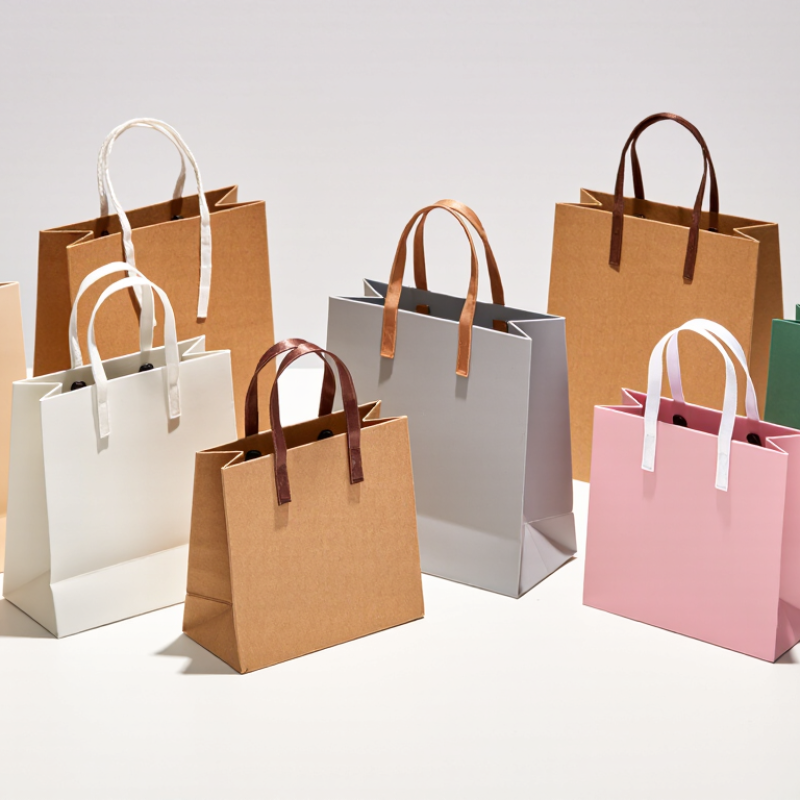
A leading cardboard gift bag manufacturer in China proves quality on the production line, not just in a polished sample. Check board weight, fold accuracy, print consistency, and handle strength across a full production run. A bag should stand upright on a retail counter, with clean corners and no glue marks. Ask for documented quality checks and repeat-order tolerances. Experience matters. So does the ability to explain a defect plainly.
Market growth raises the bar but does not guarantee better bags. Smithers’ The Future of Paper Packaging to 2028 report valued the global paper packaging market at US$381.7 billion in 2023 and forecast US$415.4 billion by 2028. This broad category includes far more than gift bags, so treat it as context, not a bag-specific forecast. Strong suppliers can provide material specifications, pre-production samples, and clear inspection records. Still, a good sample can hide inconsistent production. Request samples from more than one production batch when possible.
Tips: Send the manufacturer your bag dimensions, target load, paper finish, and artwork files. Ask how they test handle pull strength and color variation. Confirm whether recycled content or certified sourcing is available, and request supporting documentation. Compare landed cost, not just unit price. A cheaper quote may omit packing details or inspection steps. Small print differences can matter.
A useful ranking should look beyond glossy product photos. Check the board’s thickness, finish, and stated load capacity. Ask whether the manufacturer can provide material specifications and a physical sample. The bag should feel sturdy, with clean folds and handles attached securely. Small details matter. Request photos of the inside seams, too, where weak construction can be easy to miss.
Print quality is another practical measure. Inspect sample colors, text edges, and surface consistency under ordinary lighting. Ask how orders are checked for defects, and whether inspection records are available. A capable manufacturer should explain its customization options, minimum order quantities, and production schedule clearly. Delivery estimates deserve scrutiny; vague promises are not proof of reliability. Environmental claims should also be supported by specific material information, not just broad wording. No score is perfect. A sample may not represent every production run, and a low price can hide trade-offs in thickness or finishing. Rankings should note these limits and compare suppliers using the same criteria.
China’s top ten cardboard gift bag manufacturers are best compared by specialization, not by an unverified ranking. Buyers can assess suppliers for premium rigid-handle bags, recycled kraft styles, foil-stamped luxury bags, short-run digital printing, high-volume retail orders, reinforced e-commerce bags, seasonal designs, custom dimensions, matching bag-and-box sets, and export-focused production. These categories reveal different strengths. For example, a small boutique order needs accurate color matching, while a large retail run depends on repeatable folding and handle attachment.
Material claims also deserve scrutiny. FAO’s 2022 forest-products statistics record roughly 401 million tonnes of paper and paperboard production worldwide, but that figure does not verify any individual factory’s recycled content or sourcing. Ask for product-specific material records and a physical sample. The European paper industry’s CEPI Key Statistics 2023 reports a 79.3% paper recycling rate in Europe for 2022; treat it as regional context, not a China-specific result. A neat sample is not proof of a stable production line.
For a practical shortlist, compare board thickness, bag weight capacity, handle pull strength, print consistency, minimum order quantity, and lead time. Check how the base folds and whether sharp corners wear through after repeated carrying. Public factory data can be uneven, so this “top ten” framework is a sourcing map, not a verified league table. Some details still need checking.
| No. | Specialization | Typical Bag Formats | Common Materials and Features | Suitable Applications | Key Specification to Confirm |
|---|---|---|---|---|---|
| 1 | Luxury retail bags | Rigid, wide-bottom paper bags with reinforced handles | Coated or specialty paper, laminated or uncoated finishes, ribbon or twisted-paper handles | Fashion, cosmetics, jewelry, and premium gifts | Handle attachment, load capacity, surface finish, and color consistency |
| 2 | Custom-printed promotional bags | Shopping bags and event giveaway bags in custom sizes | Paperboard or kraft paper with offset, flexographic, or digital printing options | Trade shows, launches, campaigns, and corporate events | Artwork proofing, print color tolerance, and minimum order quantity |
| 3 | Eco-conscious kraft bags | Flat-handle, twisted-handle, and simple folded-top bags | Kraft paper options; recycled content and fiber sourcing depend on the specific grade and supplier | Everyday retail, food takeaway, and simple gift packaging | Paper grade, recycled-content documentation, and local recycling guidance |
| 4 | Rigid-box and gift-set packaging | Structured bags designed to coordinate with gift boxes or presentation sets | Heavy paper, reinforced bases, decorative papers, and coordinated finishes | Holiday sets, specialty gifts, and premium product bundles | Dimensional fit, base reinforcement, and matching colors across packaging components |
| 5 | Small-format favor bags | Compact bags, pouch-style paper bags, and small handled bags | Lightweight paperboard or kraft paper with optional ribbons, tags, or inserts | Weddings, parties, samples, and small keepsakes | Finished dimensions, closure method, and fit for the intended item |
| 6 | Food and confectionery gift bags | Retail gift bags and bags designed for boxed or wrapped food products | Paper constructions selected for the product and use; any food-contact suitability must be verified for the specific materials | Bakery gifts, confectionery, and seasonal food assortments | Food-contact requirements, barrier needs, and packaging regulations in the destination market |
| 7 | Premium finishes and embellishments | Custom retail and gift bags with decorative surface treatments | Options may include foil stamping, embossing, debossing, spot coating, or textured paper | Brand launches, luxury gifts, and special-edition packaging | Finish durability, artwork limits, production samples, and recyclability implications |
| 8 | Windowed and display bags | Paper bags with a viewing window or product-display panel | Paper body with a transparent window material where specified; material combinations vary by design | Retail products, favors, and packaged gift items intended to be visible | Window material, attachment method, product visibility, and disposal instructions |
| 9 | Export and bulk-order production | Standardized or custom bags packed for shipment in bulk | Specifications can be adapted to carton packing, transport protection, and repeat production | Importers, distributors, and multi-location retailers | Sample approval, carton dimensions, quality checks, lead time, and shipping terms |
| 10 | Low-volume custom and sampling runs | Prototype bags and smaller custom batches, subject to supplier capability | Digital-print or simplified constructions may be available for selected designs | Product testing, boutique orders, and pre-production evaluation | Setup charges, available print methods, sample timing, and repeat-order consistency |
Note: This table compares common specialization areas in China’s cardboard and paper gift-bag supply market. It is not a verified company ranking; actual materials, production capabilities, certifications, minimum orders, and specifications should be confirmed directly with each supplier.
Comparing cardboard gift bag manufacturers requires more than judging a smooth sample. Check board thickness, fold sharpness, handle strength, and whether printed colors stay even near the creases. Ask for samples at your intended size and weight; a bag that carries folded tissue may fail under jars or books. Small details matter. Request production capacity, lead times, and defect-handling procedures, not just a monthly output figure. FAO reported global paper and paperboard production of about 401 million tonnes in 2022. That shows the scale of the material sector, but it does not prove any single factory can meet a large order on time.
Customization should be tested against repeatability: can the supplier reproduce a specific shade, logo position, and handle length across batches? For sustainability, ask what fibers the board contains and whether coatings, laminates, inks, and adhesives affect local recycling. The American Forest & Paper Association estimated that 65–69% of U.S. paper was recycled in 2023; this is a broad paper-sector figure, not a cardboard-bag recycling rate. That distinction is easy to overlook. I would weigh documented material claims alongside practical quality checks, while admitting that “greener” choices can be hard to compare when suppliers use different boundaries and methods.
Choosing the right Chinese cardboard gift bag supplier starts with a clear specification. Note the bag’s dimensions, paperboard thickness, handle material, print colors, and expected weight. Details matter. A supplier who asks about these points may understand production needs better than one who quotes from a photo alone. Request a physical sample before approving a large order. Check the folded seams, handle attachment, surface finish, and whether the bag stands upright when filled.
Compare quotations carefully, not just by unit price. Confirm the minimum order quantity, sample and tooling costs, production schedule, packing method, and how defects are handled. Ask for recent examples of similar work and a written production specification. If possible, inspect a sample under the conditions your customers will use it. A bag that looks sturdy on a desk may crease when carried. Even a careful process can miss something, so agree on acceptable tolerances before production.
Tips: Send artwork in a high-resolution, print-ready file and request a color proof. Confirm the paperboard grade and handle length in writing. Keep approval emails and sample photos. Ask how the supplier checks handle strength and print alignment. Don’t skip the sample to save time; that shortcut can be costly.
Check board thickness, clean folds, handle attachment, and stated load capacity. Request inside-seam photos. Small details matter.
View sample colors and text edges under ordinary lighting. Check whether color stays even near creases. Ask about defect checks and inspection records.
Yes. Test the intended size with the expected contents. A bag that holds tissue may fail with jars or books. Not a guarantee.
Ask whether specific shades, logo positions, and handle lengths can be repeated across batches. Request a sample showing those details.
Ask for production capacity, lead times, minimum order quantities, and defect-handling procedures. A monthly output figure alone may not tell the whole story.
Ask about fiber content, coatings, laminates, inks, and adhesives. These details can affect local recycling. Broad claims need support.
Not directly. One U.S. paper-sector estimate placed recycling at 65–69% in 2023. That is not a cardboard-bag recycling rate.
No score is perfect. Compare suppliers using the same criteria, but remember that one sample may not represent every production run. I may still miss a trade-off.
This guide explores what makes a leading cardboard gift bag manufacturer in China, from dependable materials and consistent workmanship to responsive communication and reliable delivery. It outlines practical criteria for comparing suppliers, including product quality, customization options, production capacity, experience with different bag styles, and commitment to sustainable materials and processes.
Rather than treating every manufacturer as the same, the article groups China’s top ten suppliers by their areas of specialization, helping buyers understand which capabilities may best suit their needs. It also explains how to assess samples, discuss design and order requirements, and weigh cost against quality and service. By using these comparisons, businesses can choose a Chinese supplier for Cardboard Gift Bags with greater confidence and find a partner whose strengths align with their project.
