
Choosing Luxury Skincare Packaging for global buyers requires more than selecting a heavy glass jar. Packaging must communicate trust, protect active formulas, and perform across climates, logistics systems, and retail environments. McKinsey’s The State of Fashion: Beauty report estimates that the global beauty market could reach about $580 billion by 2027. Grand View Research also projects steady growth in the global cosmetic packaging market through 2030. These figures show strong commercial potential. They also increase buyer expectations.
Marc Rosen, founder of Marc Rosen Associates and a recognized luxury packaging designer, has said, “Packaging is the physical expression of the brand.” That principle remains practical. A cool-touch glass bottle, precise pump, and restrained foil detail can suggest quality before the first application. However, appearance cannot replace performance. Buyers should examine compatibility with oils, acids, retinoids, and sensitive formulas. They should request migration testing, closure testing, drop testing, and stability evidence.
Sustainability now shapes purchasing decisions. The Ellen MacArthur Foundation promotes packaging systems designed for reuse, recycling, and material efficiency. Yet this area is not simple. Heavy glass may feel luxurious, but transportation emissions can increase. Recycled plastic may reduce weight, but it can affect color, clarity, and prestige. This framework is useful, but not flawless. Global buyers still need supplier audits, documented material origins, regional compliance checks, and realistic recycling claims. The strongest Luxury Skincare Packaging choice balances tactile appeal, formula protection, verified sustainability, and reliable delivery. Small details matter. So do uncomfortable questions.
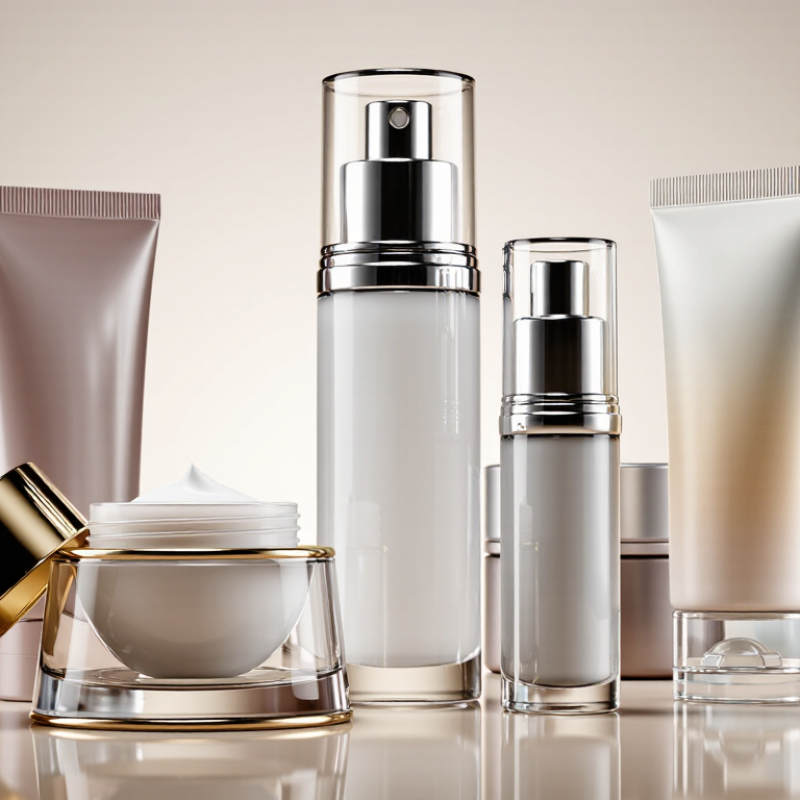
Luxury skincare packaging should begin with buyer expectations, not decoration. Global buyers often assess quality through weight, surface finish, closure precision, and product protection. However, a heavier jar can feel luxurious while increasing transport emissions. That assumption deserves scrutiny.
McKinsey’s 2023 beauty report estimates the global beauty market could reach about $580 billion by 2027, with skincare representing roughly 40% of the sector. This growth raises packaging expectations across regions. Buyers want containers that protect formulas from light, oxygen, leakage, and contamination. They also expect consistent quality during long international shipping. A practical target is a stable, easy-to-open package with clear material information and strong tamper evidence.
Sustainability now affects purchasing decisions. PwC’s 2024 Voice of the Consumer Survey found that consumers would pay an average 9.7% premium for sustainably produced goods. Yet appearance still matters. Use refined textures, precise printing, and restrained color contrast instead of excessive components. Packaging teams should test refill systems, mono-material structures, and reduced secondary packaging before making claims. These options may not suit every formula or market. That is the difficult part. Global buyers need evidence, not vague promises. Share packaging specifications, recyclability conditions, transport testing results, and disposal guidance. Independent testing strengthens credibility, although even well-designed packaging can fail when local recycling systems differ.
Luxury skincare packaging should begin with material performance, not appearance alone. Glass offers weight, clarity, and a premium hand feel, but it can crack during long-distance transport. High-quality plastic may reduce breakage, yet some finishes can scratch easily. Recycled materials can support sustainability goals, although their color and surface consistency may vary.
Design quality appears in small details. Check the alignment between the cap, bottle, pump, and label. A loose closure can create leakage, while an overly tight one frustrates users. The pump should deliver a consistent dose without sputtering. I recommend testing several samples under repeated opening, closing, and dispensing cycles. Beautiful prototypes sometimes perform poorly after real handling.
Product protection requires practical testing. Place filled units in shipping cartons, then examine them after vibration, drops, temperature changes, and humidity exposure. Look for cracked corners, separated coatings, faded printing, or weakened seals. Packaging should also protect light-sensitive formulas when needed. A dark container may help, but only laboratory testing can confirm its effectiveness. I once preferred a heavier package because it felt more luxurious; later, its shipping weight increased costs and created unnecessary handling issues. That choice needed more reflection. Global buyers should compare material durability, design precision, product compatibility, and market-specific packaging requirements before approving production.
Assess materials, design quality, and product protection by understanding the typical density of common primary packaging materials.
Representative room-temperature density values: glass ≈ 2.50 g/cm³, aluminum ≈ 2.70 g/cm³, PET ≈ 1.38 g/cm³, and PP ≈ 0.90 g/cm³. Actual values vary by grade, additives, wall thickness, and manufacturing process. Lower-density materials can reduce packaging weight, while final product protection still requires barrier, closure, drop, and compatibility testing.
Luxury packaging must satisfy regulations before it creates a premium impression. In the European Union, Regulation (EC) No. 1223/2009 requires a responsible person, safety assessment, product information file, and compliant ingredient labeling. Check the INCI list, net quantity, batch code, responsible address, and durability details. Claims such as “natural” or “eco-friendly” also need clear evidence. A beautiful box cannot repair an incomplete label.
Regional checks matter. The United States applies different cosmetic requirements, including facility registration and product listing under MoCRA. Packaging teams should confirm whether the container, carton, and label can support each market’s language and disclosure rules. Keep a documented review trail. It helps, although paperwork is not glamorous.
Sustainability needs measurable proof, not green-colored paper. PwC’s 2024 Voice of the Consumer Survey found that consumers were willing to pay an average 9.7% premium for sustainably produced goods. Meanwhile, the Circularity Gap Report 2024 estimated that only 7.2% of the global economy was circular. Choose materials that local systems can actually collect and recycle. Verify recycled content, FSC certification, ink composition, and component separation. A heavy glass jar may feel luxurious, yet its transport impact can be overlooked. I have seen packaging teams assume recyclability without checking local sorting rules. That assumption deserves another review.
How to Choose Luxury Skincare Packaging for Global Buyers?
Comparing suppliers requires more than reviewing polished product photos. Request physical samples, material specifications, decoration limits, pump compatibility, and quality inspection records. Samples can mislead. A beautiful bottle may show uneven coating, loose caps, or color variation after transport. Ask each supplier about factory location, production equipment, quality controls, and experience with glass, plastic, aluminum, or refillable structures. Independent audits and clear technical documents make comparisons more reliable.
Cost comparisons should include tooling, sampling, unit prices, decoration, testing, packaging, freight, and payment terms. A low quoted price may exclude mold charges or protective inserts. Calculate the landed cost for your target market. Minimum order quantities also need careful review. A 10,000-unit MOQ can reduce the unit price, but it may create excess inventory and limit design changes. Smaller orders usually cost more per piece. That trade-off is real.
Production capability matters when an order becomes complicated. Confirm whether the supplier can manage custom molds, airless pumps, metallic finishes, color matching, and batch consistency. Check monthly capacity and realistic lead times, especially before seasonal launches. Ask for a pilot run before full production. In practical sourcing work, this step often reveals problems hidden by prototypes. I still find supplier comparisons imperfect because forecasts change. Leave room for rejects, delays, and one revision. A dependable partner explains those risks instead of promising everything.
| Supplier Profile | Typical Production Region | Best-Suited Packaging | Common Materials | Indicative MOQ | Indicative Unit Cost at 10,000 Units | Tooling or Setup Cost | Sample Lead Time | Mass Production Lead Time | Production Capabilities | Quality and Compliance Considerations |
|---|---|---|---|---|---|---|---|---|---|---|
| Large-Scale Packaging Manufacturer | East Asia | Airless bottles, jars, droppers, pumps, tubes, and complete skincare sets | Glass PP PET Aluminum | 10,000–50,000 units per SKU | US$0.35–US$2.80 | US$2,000–US$15,000 for new molds; decoration setup may be charged separately | 7–15 working days | 35–60 working days after artwork and sample approval | High-volume injection molding, glass sourcing, assembly, screen printing, hot stamping, coating, and automated filling | Request material declarations, migration documentation where applicable, batch traceability, color standards, and production inspection records |
| Mid-Sized Custom Packaging Factory | East and Southeast Asia | Custom cream jars, serum bottles, lotion pumps, and coordinated primary packaging | Glass Acrylic PCR Plastic PP | 3,000–10,000 units per SKU | US$0.55–US$3.60 | US$1,000–US$8,000; stock components can reduce or eliminate tooling costs | 10–20 working days | 40–70 working days | Moderate-volume customization, component matching, vacuum metallization, frosting, color matching, and small-batch assembly | Confirm pump compatibility, closure torque, leak testing, decoration adhesion, and compatibility with oils, acids, and active cosmetic formulas |
| Premium Glass Packaging Specialist | Europe | Heavy-wall jars, thick glass bottles, sculpted caps, and prestige fragrance-style skincare packaging | Flint Glass Recycled Glass Metal Wood | 5,000–20,000 units per design | US$1.40–US$6.50 | US$5,000–US$30,000 for custom glass tooling and finishing development | 15–30 working days | 60–100 working days | Thick-glass forming, precision decoration, embossing, frosting, lacquering, metallized finishes, and high-end component assembly | Suitable for prestige positioning; verify recycled-content percentage, heavy-metal restrictions for decoration, dimensional tolerances, and breakage protection |
| Sustainable Packaging Converter | Europe and North America | Refillable jars, mono-material tubes, PCR bottles, paper-based cartons, and low-plastic secondary packaging | PCR PP PCR PET Paperboard Aluminum | 5,000–25,000 units per SKU | US$0.70–US$4.20 | US$500–US$10,000 for dies, printing plates, molds, or refill-system development | 10–25 working days | 45–85 working days | PCR processing, refill systems, FSC-certified carton converting, water-based coatings, paper molding, and mono-material design | Ask for chain-of-custody documents, recycled-content verification, recyclability guidance by destination market, and packaging-weight data |
| Flexible Packaging Specialist | Asia, Europe, and North America | Sachets, refill pouches, sample packs, sheet-mask packs, and lightweight travel packaging | PE PET Aluminum Foil Paper Laminates | 10,000–100,000 units per artwork | US$0.06–US$0.65 | US$300–US$3,000 for cylinders, plates, or digital-print preparation | 7–14 working days | 25–50 working days | Multilayer film extrusion, spout pouches, high-resolution printing, sachet forming, small-format filling, and custom barrier structures | Confirm oxygen and moisture barrier performance, seal strength, formula compatibility, print migration controls, and destination-market recycling rules |
| Local or Regional Packaging Distributor | North America, Europe, Middle East, and Australia | Stock bottles, jars, droppers, pumps, cartons, and ready-to-decorate components | Glass PET PP Cardboard | 100–2,000 units per stock item | US$0.80–US$5.00 | Usually none for stock items; US$500–US$5,000 for decoration or labeling | 3–10 working days from available inventory | 15–35 working days for decoration and replenishment | Stock holding, kitting, labeling, decoration coordination, local delivery, and lower-volume order fulfillment | Best for market testing and smaller launches; verify inventory continuity, component interchangeability, packaging dimensions, and local labeling requirements |
| Turnkey Packaging and Filling Partner | Europe, North America, and Asia | Complete primary packaging, filling, labeling, cartoning, and finished skincare kits | Glass Plastic Metal Paperboard | 5,000–30,000 finished units per product | US$1.20–US$8.00 including packaging and basic assembly | US$1,000–US$12,000 for packaging development, testing, and line setup | 15–30 working days | 50–90 working days after formula, artwork, and packaging approval | Component sourcing, filling, crimping, labeling, coding, secondary assembly, quality release, and export documentation | Confirm cosmetic GMP systems, batch records, stability or compatibility testing responsibilities, finished-product release procedures, and export documentation |
Luxury skincare packaging must express refinement without ignoring how different markets buy, use, and discard it. A heavy glass jar may feel premium, yet it increases transport weight and breakage risk. A useful sourcing test examines the whole journey: shelf presence, shipping, bathroom handling, and local recovery systems. Looks alone fail.
NielsenIQ’s 2023 State of Sustainability Report found that 78% of U.S. respondents considered a sustainable lifestyle important. This figure is not a global average, but it signals strong commercial pressure. McKinsey’s report, Sustainability in Packaging: Inside the Minds of Global Consumers, found that 60–70% of surveyed consumers were willing to pay more for sustainable packaging. Buyers still expect visual prestige. Use precise decoration, restrained colors, and tactile finishes, rather than unnecessary layers.
Material choices should match regional infrastructure. Mono-material components, clear recycling guidance, and separable pumps can improve practical fit. However, “recyclable” does not guarantee collection everywhere. Smithers’ The Future of Sustainable Packaging to 2028 highlights material reduction and recovery performance as key industry priorities. Packaging teams should request verified supplier data, drop-test results, and transport trials. A refill system may reduce waste, but it can create hygiene or user-friction concerns. Test it with real consumers.
A perfect package is probably impossible. The better target is a package that travels well, communicates honestly, and earns its premium through thoughtful performance.
It should protect formulas from light, oxygen, leakage, and contamination. A stable closure matters. Long-distance shipping can expose weak parts, so test vibration, pressure, and temperature changes.
No. A heavy glass jar may feel premium, but it can increase transport emissions. Weight needs a clear purpose. I would question the assumption that heavier always means better.
Use precise printing, controlled textures, and restrained color contrast. Avoid unnecessary layers and decorative components. Small details matter, such as an even coating and a smooth cap fit.
Request material specifications, recycled-content evidence, certification documents, and disposal guidance. Check whether local facilities actually collect and sort the material. Green-colored paper alone proves very little.
Check the ingredient list, net quantity, batch code, responsible address, and durability information. Labels may need different languages and disclosures across markets. A beautiful box cannot fix missing information.
Request physical samples, technical documents, quality records, and decoration limits. Inspect caps, coatings, color consistency, and pump compatibility. Photos are not enough. They can hide defects.
Include tooling, samples, decoration, testing, protective inserts, freight, and payment terms. A low quote may exclude mold charges or shipping protection. Calculate the landed cost for each target market.
Compare unit savings with inventory risk, storage space, and possible design changes. A large order may lower costs but create excess stock. Smaller orders cost more per piece. That trade-off is real.
A pilot run can reveal coating variation, loose closures, rejects, and filling problems. It also tests batch consistency before full production. Prototypes can look perfect. Real production may disagree.
Choosing Luxury Skincare Packaging for global buyers requires more than an attractive appearance. Brands should first define their goals, target markets, and customer expectations, then evaluate packaging materials, structural quality, usability, and product protection. The right packaging should preserve formulas, support convenient handling, and communicate a refined, trustworthy image across different cultures and purchasing preferences.
Global suitability also depends on regulatory compliance, clear labeling, responsible material choices, and realistic sustainability claims. Buyers should compare suppliers based on quality control, production capabilities, minimum order quantities, lead times, customization options, and total costs rather than focusing only on the initial price. By balancing visual appeal with durability, market requirements, supply reliability, and environmental considerations, businesses can select Luxury Skincare Packaging that strengthens their product presentation while remaining practical and adaptable for international distribution.
